





Myth 1: All Kidney Patients Should Follow the Same Diet
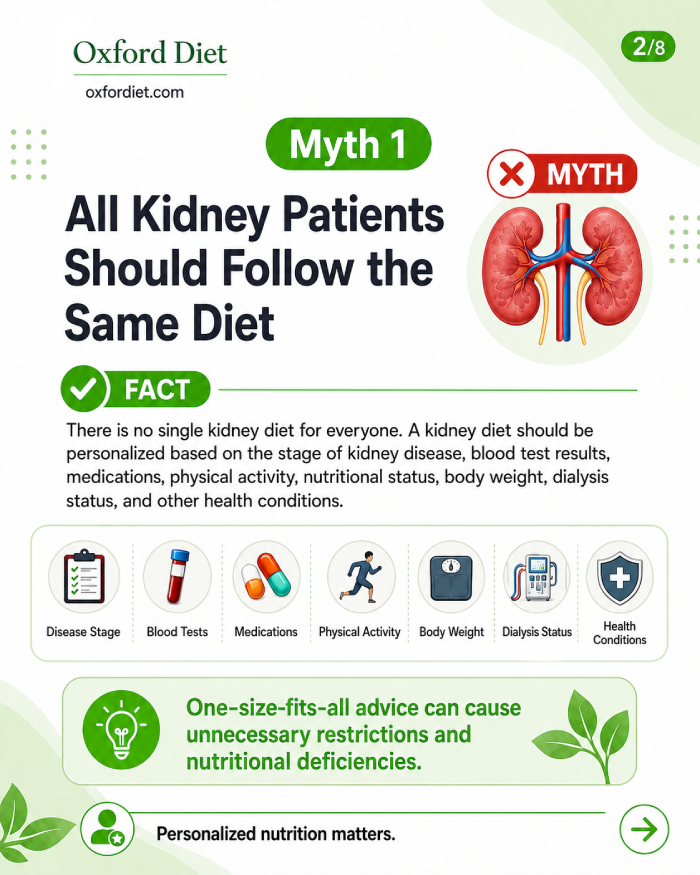
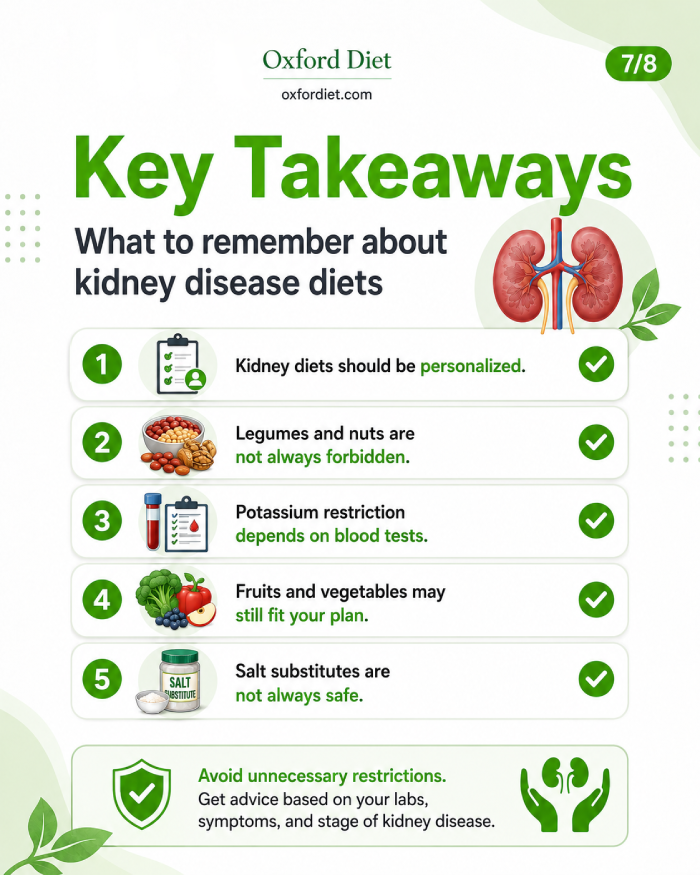
One of the most common misconceptions about kidney disease nutrition is that there is only one kidney diet and all patients must follow it. In reality, the diet for those with chronic kidney disease should be highly individualized and tailored to each patient’s condition. The nutritional needs of someone in the early stages of the disease differ from those in the later stages or those undergoing dialysis.
Therefore, several factors must be considered when planning a diet for kidney patients, including:
- Stage of kidney disease
- Blood test results
- Medications
- Physical activity level
- Nutritional status and body weight
- Whether or not the patient is on dialysis
- Underlying health conditions
Following generic, one-size-fits-all advice can lead to unnecessary restrictions and even nutritional deficiencies. Unjustified elimination of food groups may reduce intake of fiber, vitamins, and essential minerals, negatively impacting the patient’s quality of life.
Myth 2: Legumes and Nuts Are Completely Forbidden
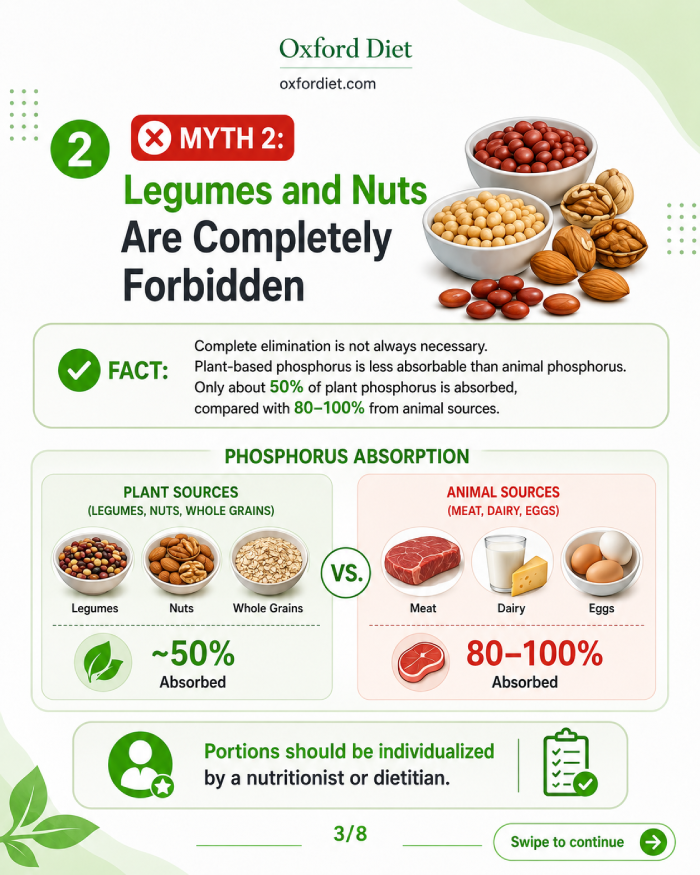
Another widespread myth is that all plant-based foods containing phosphorus must be eliminated from the diet. In the past, many chronic kidney disease patients were told to avoid legumes, nuts, and whole grains entirely. However, recent research shows this approach isn’t always correct, as the source of phosphorus is just as important as the amount.
Phosphorus in plant sources is mainly stored as phytate. Since the human body has limited ability to break down these compounds, only about 50% of plant-based phosphorus is absorbed, compared to 80–100% from animal sources.
Therefore, complete elimination of these foods is not recommended, as it can reduce diet quality and limit intake of many essential micronutrients. Instead, the amount consumed daily should be determined by a nutritionist or dietitian.
Myth 3: All Kidney Patients Need a Low-Potassium Diet
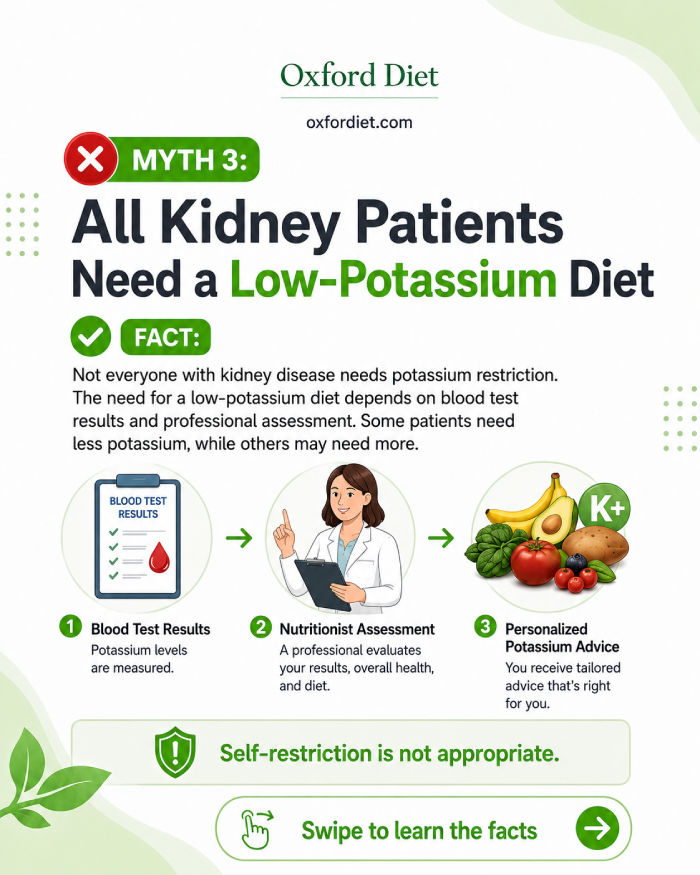
It’s a common misconception that everyone with kidney disease must avoid potassium-rich foods. As a result, many patients independently remove fruits, vegetables, and other potassium sources from their diets. In reality, not all kidney patients require strict potassium restriction.
The only way to determine the need for potassium limitation is through blood tests to check potassium levels. Some patients experience high potassium and need to limit intake, while others may actually require more of this mineral. Only blood test results and a nutritionist’s assessment can determine whether potassium restriction is necessary for a particular patient.
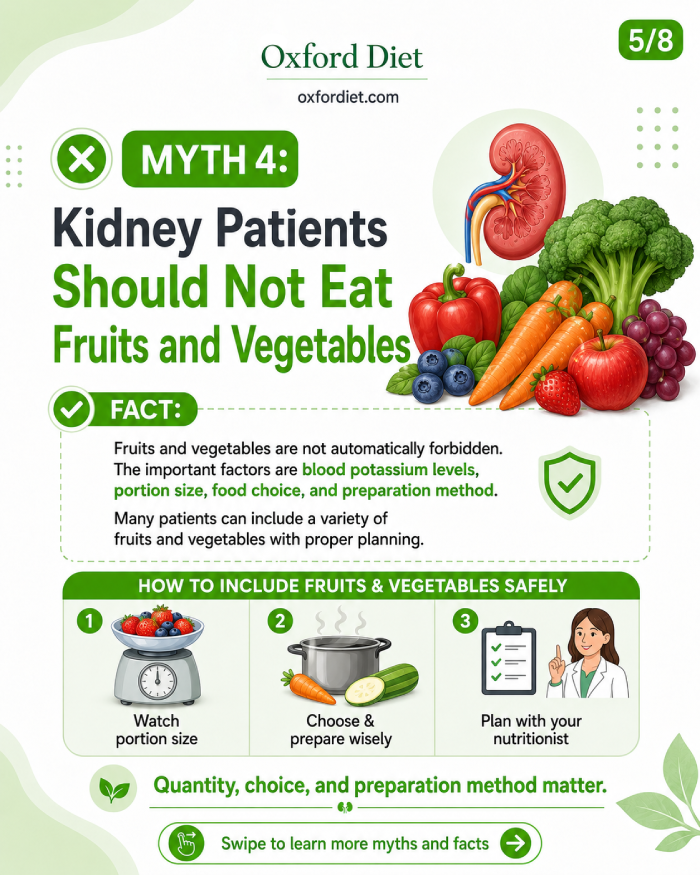
Myth 4: Kidney Patients Should Not Eat Fruits and Vegetables
This is another common and incorrect belief about kidney disease nutrition. Many people, after being diagnosed, eliminate all fruits and vegetables from their diets, but this restriction is not necessary for everyone.
The main concern is the potassium content in many fruits and vegetables. Since some kidney patients develop high potassium levels, it was previously recommended to avoid many of these foods. However, it’s now clear that not all kidney patients have hyperkalemia, and the need for potassium restriction should be based on blood tests.
Therefore, eliminating fruits and vegetables is not mandatory; rather, the amount and method of consumption are important. With proper planning, many patients can include a variety of fruits and vegetables in their diets.
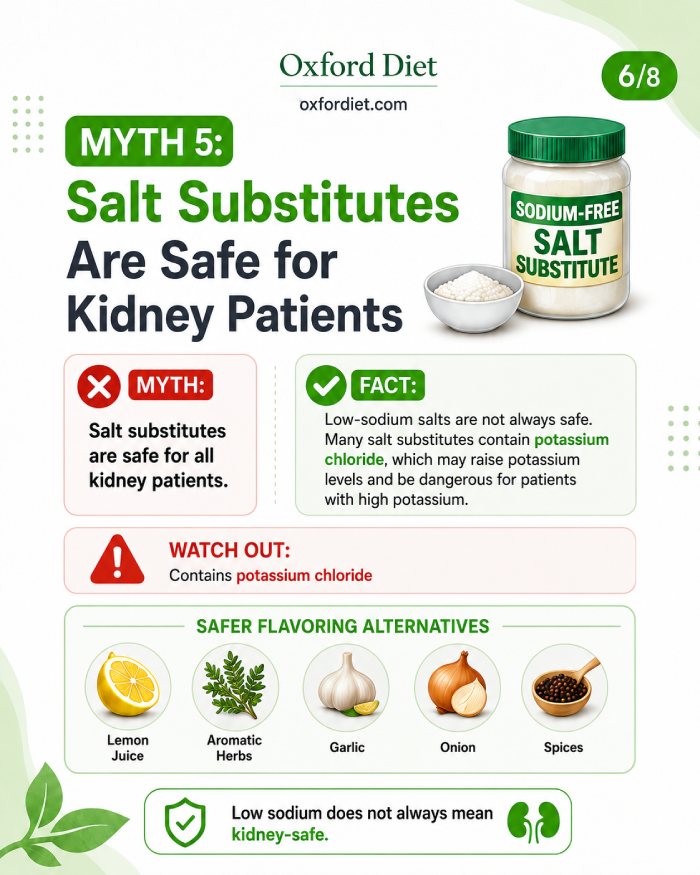
Myth 5: Salt Substitutes Are Safe for Kidney Patients
Some people with kidney disease turn to low-sodium or salt substitute products to reduce sodium intake. At first glance, these products seem healthier because they lack sodium, but for some kidney patients, they can be problematic.
Many low- or no-sodium salts use potassium chloride instead of sodium chloride. While this reduces sodium, it increases potassium content. In healthy individuals, the kidneys usually excrete excess potassium, but in those with kidney failure—especially those with high potassium—these products can cause potassium to build up in the body.
Therefore, a product being low in sodium does not necessarily mean it’s safe for kidney patients. To enhance food flavor without increasing sodium or potassium, options like lemon juice, aromatic herbs, garlic, onion, and spices can be used.